 Votenir
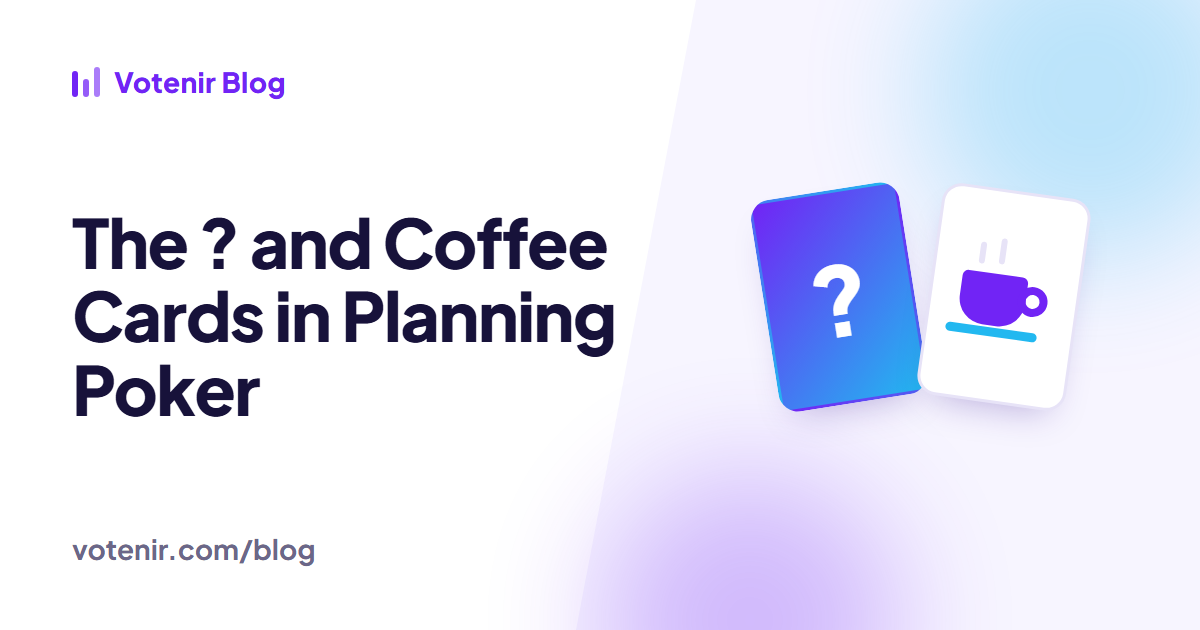
Most planning poker decks include two cards that aren't numbers: a question mark (?) and a coffee cup (☕). Teams often treat them as jokes, or remove them altogether. That's a mistake. Used properly, these two cards save more time than any other card in the deck.
The ? card: "I can't estimate this yet"
The question mark means the voter doesn't have enough information to give a number. It isn't a refusal, and it isn't "I don't care". It's a signal that the story has gaps.
When to play it
- The acceptance criteria are missing or vague.
- You don't understand the technical approach well enough to size it.
- The story depends on something unknown, such as another team's API or a design that isn't finished.
- You've just joined the team and have no reference for the codebase. Say so; it's useful for the facilitator to know.
How facilitators should respond
- One ? Ask the person what's missing. Often a one-sentence answer is enough, then re-vote.
- Two or more ? Stop estimating this story. It isn't ready. Note the questions and move it back to refinement.
- ? from the person who'll build it. Treat it as two or more. If the likely implementer can't size it, nobody can.
What not to do: push people to "just pick a number". A forced number on an unclear story is worse than no number at all, because the team will plan around it.
The ☕ card: "I need a break"
The coffee card means "I'm too tired to estimate well" or simply "can we take five?". It's a polite way to say what everyone's thinking 50 minutes into a session.
Why it matters
Estimation is concentrated work. After 45–60 minutes, people start voting with the group to get through the list faster. That's exactly the anchoring planning poker is meant to prevent.
How facilitators should respond
- Take the break. Five minutes. Don't negotiate.
- If it comes up early, ask whether the session is too long or the stories too unclear. Both are fixable.
- If it comes up every session, shorten your sessions and refine stories better beforehand.
How the special cards affect the result
Neither card is a number, so neither should count towards the average. If a tool turned ? into zero, it would drag the estimate down and hide the problem.
In Votenir, the average only includes numeric cards: ? and ☕ are shown on the table but left out of the calculation. The Fibonacci deck includes both cards, and the T-shirt and Sequential decks include ?.
| Card | Meaning | Counts in average? | Facilitator action |
|---|---|---|---|
| ? | Not enough information | No | Clarify; 2+ = back to refinement |
| ☕ | Need a break / too tired | No | Take a 5-minute break |
| Number | An estimate | Yes | Compare the spread |
Making the cards part of your team agreement
Write the meaning of both cards into your team's working agreement:
- "A ? is always welcome and always gets an answer."
- "Two ?s means the story goes back to refinement, no debate."
- "Anyone can play ☕ and we take five minutes."
It sounds small, but it removes the social pressure that makes people vote with the room. For more habits like this, see 10 planning poker best practices, or read how to choose a deck.
Frequently asked questions
What does the question mark mean in planning poker?
It means the voter doesn't have enough information to estimate the story. It's a signal to clarify the story, not a refusal.
What does the coffee cup card mean in planning poker?
It means the voter needs a break. Long sessions lead to tired, anchored estimates, so a short break improves the results.
Do the ? and coffee cards count towards the average?
They shouldn't. In Votenir, only numeric cards are included in the average.
What if someone always plays the question mark?
Talk to them after the session. They may need more context on the codebase, or the team may be estimating stories before they're ready.